
Robotic Gastrointestinal Surgery: Advanced Technology Transforming GI Surgery
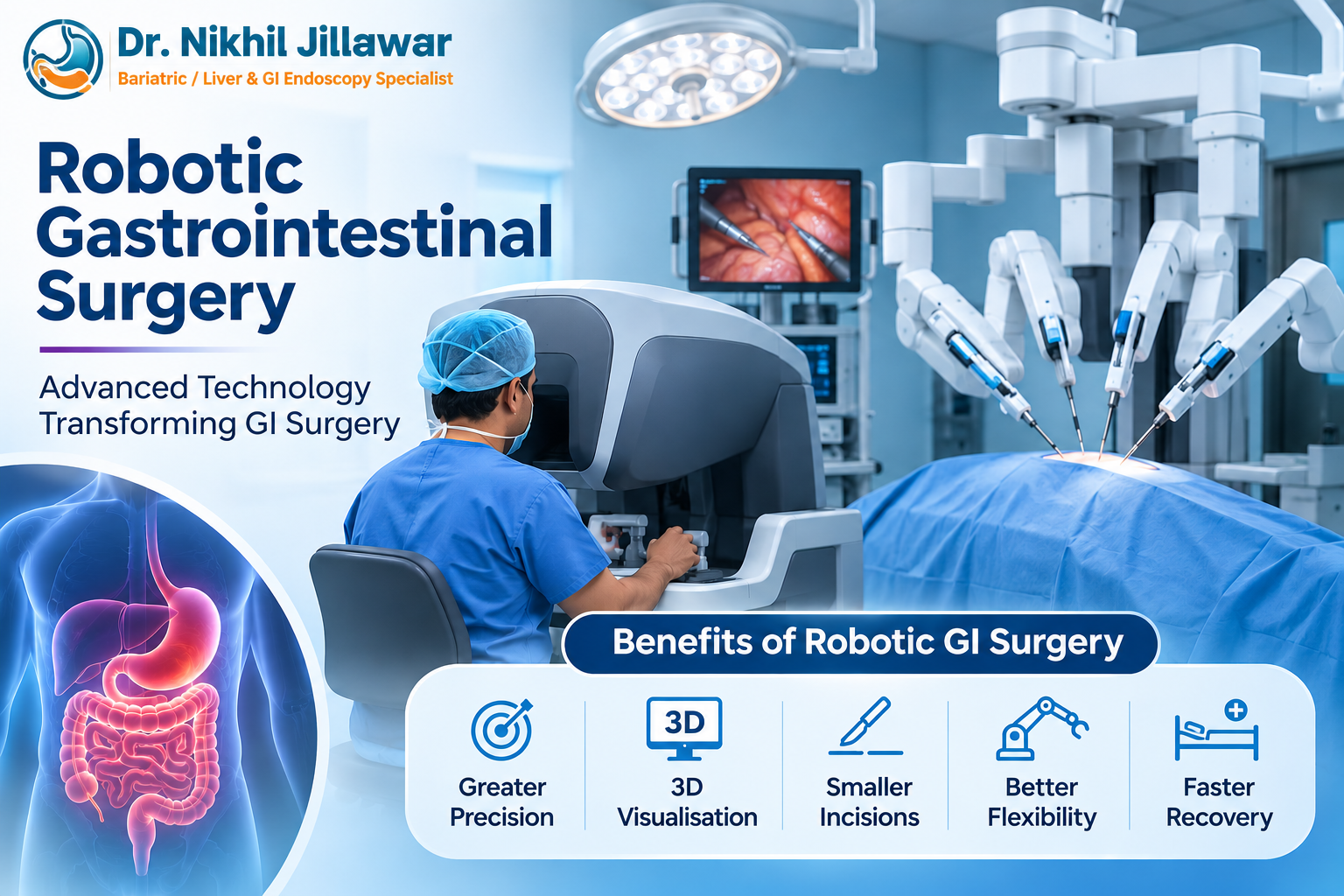
Robotic gastrointestinal surgery is transforming modern surgical care with advanced technology, enhanced visualisation and precise instrument movements. It allows trained surgeons to perform selected complex digestive system operations using minimally invasive techniques.
For patients looking for an experienced Gastro Surgeon in Pune, understanding robotic surgery can help them explore modern treatment options for gastrointestinal conditions.
What Is Robotic Gastrointestinal Surgery?
Robotic gastrointestinal surgery is a minimally invasive technique in which a surgeon controls specialised robotic instruments through a computer console.
The system provides magnified 3D visualisation and flexible instrument movements, helping surgeons perform delicate surgical steps with greater control.
The robot does not operate independently. The surgeon controls every movement throughout the procedure.
An experienced Surgical Gastroenterologist in Pune evaluates whether robotic-assisted surgery is appropriate based on the patient’s condition.
Gastrointestinal Conditions Requiring Surgical Treatment
Surgical gastroenterologists manage several conditions involving the digestive system. Depending on the patient’s diagnosis, surgical treatment may include:
1. Gallbladder Surgery (Cholecystectomy)
Cholecystectomy is a surgical procedure to remove the gallbladder, commonly recommended for symptomatic gallstones and certain gallbladder conditions. It can be performed using laparoscopic techniques and, in selected cases, robotic assistance.
2. Hernia Repair
Hernia repair involves correcting a weakness or opening in the abdominal wall. Minimally invasive and robotic-assisted techniques may be considered for selected hernia cases.
3. Liver Surgery
Liver surgery may be required for certain liver tumours, cysts and other conditions. The surgical approach depends on the disease, its location and the patient’s overall health.
4. Abdominal Wall Surgery
Abdominal wall surgery addresses conditions such as complex or recurrent hernias and abdominal wall defects. Advanced surgical techniques may help manage selected complex cases.
5. Colorectal Cancer Surgery
Colorectal cancer surgery involves removing cancer-affected portions of the colon or rectum. Robotic-assisted and laparoscopic approaches may be considered depending on the cancer stage and surgical requirements.
6. Achalasia Cardia and Heller Myotomy
Achalasia cardia is a condition in which the lower oesophageal sphincter does not relax properly, making swallowing difficult. Heller Myotomy is a surgical procedure that helps improve swallowing by dividing the affected muscle fibres of the lower oesophagus.
Benefits of Robotic Gastrointestinal Surgery
Robotic-assisted surgery offers several technical advantages in selected procedures:
Enhanced Precision: Provides controlled instrument movements during complex operations.
3D Visualisation: Offers magnified three-dimensional views of the surgical area.
Smaller Incisions: Minimally invasive techniques generally use smaller surgical openings than traditional open surgery.
Instrument Flexibility: Wristed instruments allow greater movement in difficult anatomical areas.
Recovery Benefits: Selected patients may experience shorter hospital stays and faster recovery compared with open surgery.
Actual outcomes depend on the procedure, patient’s health and surgical expertise.
Robotic Surgery vs Laparoscopic Surgery
Both robotic and laparoscopic surgery are minimally invasive approaches.
Laparoscopic surgery uses specialised instruments controlled directly by the surgeon, while robotic surgery uses a computer-assisted system with enhanced 3D visualisation and flexible instrument movements.
Neither technique is automatically better for every patient. The appropriate approach depends on the condition, surgical complexity and surgeon’s experience.
Is Robotic Gastrointestinal Surgery Suitable for Everyone?
No. Robotic surgery is suitable for selected patients and procedures. Before recommending treatment, the surgeon evaluates medical history, diagnostic reports, imaging studies and overall health.
An experienced Best Gastro Surgeon in Pune can explain the available options, including robotic, laparoscopic and open surgery.
Consult Dr. Nikhil Jillawar: Surgical Gastroenterologist in Pune
Dr. Nikhil Jillawar specialises in Surgical Gastroenterology, GI Oncology and hepatobiliary surgery.
At Gastro Liver Care Pune, patients can seek guidance for conditions involving the gallbladder, hernia, liver, abdominal wall and colorectal system.
If you are looking for an experienced Surgical Gastroenterologist in Pune, consult a specialist to understand your diagnosis and suitable treatment options.
Frequently Asked Questions
1. What is robotic gastrointestinal surgery?
It is a minimally invasive surgical technique in which a surgeon controls specialised robotic instruments to perform selected digestive system operations.
2. Is robotic surgery better than laparoscopic surgery?
Robotic surgery offers enhanced 3D visualisation and instrument flexibility, but the best approach depends on the patient’s condition and surgical requirements.
3. Can gallbladder surgery be performed robotically?
Robotic-assisted cholecystectomy is possible in selected cases. Laparoscopic cholecystectomy is also a commonly used approach.
4. What is Heller Myotomy?
Heller Myotomy is a surgical procedure used to treat achalasia cardia by dividing muscle fibres in the lower oesophagus to help food pass into the stomach.
Conclusion
Robotic gastrointestinal surgery represents an important advancement in modern surgical care. Its enhanced visualisation, flexible instruments and minimally invasive approach provide valuable options for selected complex GI procedures.
Consult Dr. Nikhil Jillawar at Gastro Liver Care Pune to understand your gastrointestinal condition and explore suitable surgical treatment options.
Recent Posts
- Robotic vs Laparoscopic Surgery: Which Is Better for Gastrointestinal Conditions?
- Robotic Gastrointestinal Surgery: Advanced Technology Transforming GI Surgery
- 5 Simple Ways to Improve Digestive Health: Expert Tips from a Gastroenterologist
- The Complete Guide To Abdominal Pain: Causes, Risk Factors And Treatment
- Gastric Or Gas Problem: How To Cure Gastric Problem?