
Complex Hernia Repair: Treatment Options, Surgical Techniques and Recovery
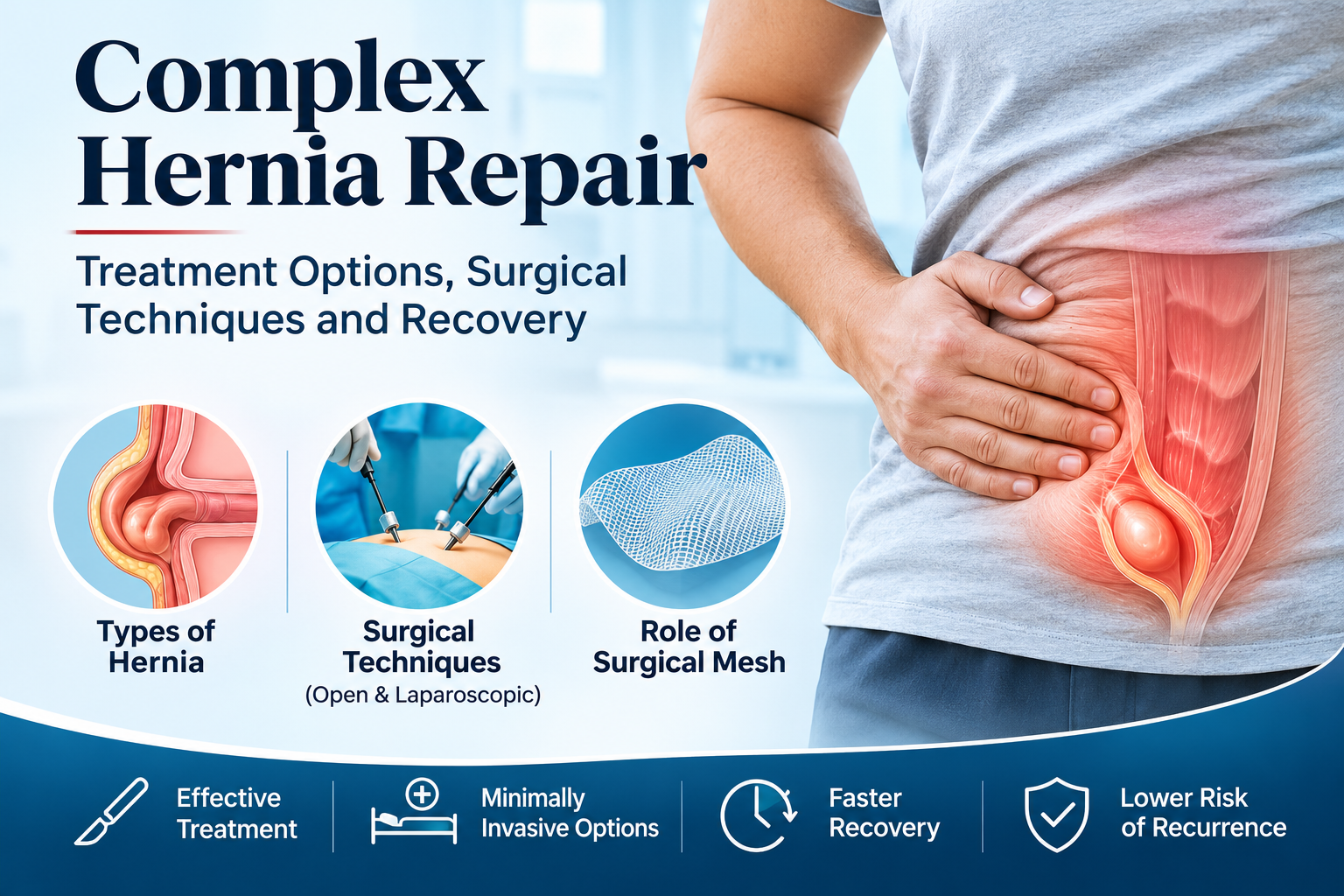
A hernia occurs when an internal organ or tissue pushes through a weak area in the abdominal muscle wall. It may appear as a visible bulge in the abdomen or groin and can sometimes cause pain or discomfort.
While some hernias produce very few symptoms, larger, recurrent or complicated hernias may require careful surgical evaluation. Understanding the available treatment options can help patients make informed decisions about hernia repair.
What Is a Complex Hernia?
A complex hernia may be more challenging to treat because of its size, location, recurrence or previous abdominal surgery.
Some situations that may require specialised surgical planning include:
Large abdominal or groin hernias
Hernias that return after previous surgery
Incisional hernias developing near an old surgical scar
Hernias associated with significant abdominal wall weakness
The appropriate treatment depends on the type of hernia, its severity and the patient’s overall health.
What Causes a Hernia?
A hernia can be present from birth or develop later due to weakness in the abdominal wall. Certain activities and medical conditions can increase pressure inside the abdomen and contribute to hernia development.
Common contributing factors include:
Straining during bowel movements
Persistent coughing
Straining while urinating
Lifting heavy objects
Physical exertion
Common Types of Hernia
Different hernias develop in different areas of the abdominal wall.
1. Inguinal Hernia: One of the most common types, it develops in the groin when tissue pushes through a weak area in the inguinal canal.
2. Femoral Hernia: Occurs near the groin, through an opening where major blood vessels pass from the abdomen into the leg. It is relatively uncommon and is seen more frequently in women.
3. Hiatus Hernia: Develops when part of the stomach pushes upwards through an opening in the diaphragm into the chest.
4. Umbilical or Paraumbilical Hernia: Appears around the belly button when fatty tissue or part of the bowel pushes through a weak area.
5. Incisional Hernia: Develops through a weakened area of an abdominal surgical scar following an earlier operation.
Symptoms of Hernia You Should Not Ignore
Some people with a hernia experience very few symptoms. Others may notice:
A visible lump or swelling in the abdomen or groin
Discomfort while lifting heavy objects
Pain during physical activity
A feeling of pressure around the affected area
Swelling that becomes more noticeable while standing or coughing
When to seek urgent medical attention: Sudden pain, especially when a hernia bulge cannot be pushed back, may indicate that tissue is trapped. If accompanied by vomiting or severe abdominal pain, seek emergency medical care immediately. A trapped hernia can sometimes develop into strangulation, which affects the blood supply to the trapped tissue.
What Are the Treatment Options for Hernia?
Hernias generally do not disappear on their own. Hernia repair surgery is used to return the protruding tissue to its appropriate position and strengthen the weakened area.
The two main surgical approaches described on the Gastro Liver Care Pune website are:
1. Open Hernia Repair
In open hernia surgery, the surgeon makes an incision near the affected area to access the hernia. The protruding tissue is returned to the abdomen, and the weakened muscle area is repaired.
In many cases, surgical mesh is placed over the weak area and secured with stitches. The mesh helps reinforce the abdominal wall and supports tissue growth around the repair.
2. Laparoscopic Hernia Repair
Laparoscopic hernia repair, also called keyhole surgery, is a minimally invasive technique.
The surgeon makes several small incisions and uses specialised instruments along with a tiny camera to perform the repair. Mesh may be used to strengthen the abdominal wall.
For suitable patients, laparoscopic surgery may offer smaller incisions and less postoperative discomfort. However, the choice of technique depends on the hernia’s location, severity and the patient’s medical condition.
Why Is Surgical Mesh Used in Hernia Repair?
Surgical mesh is commonly used in hernia repair to reinforce the weakened abdominal wall.
It acts as a supportive structure over the affected area, allowing surrounding tissue to grow through it. This helps strengthen the repair without placing excessive tension on the surrounding tissues.
The decision to use mesh depends on the type of hernia and the surgical approach. Your surgeon will explain its benefits and possible complications before surgery.
Possible Complications After Hernia Surgery
Like any surgical procedure, hernia repair may involve certain risks. Possible complications include:
Recurrence of the hernia
Seroma, or fluid collection beneath the skin
Difficulty urinating
Injury to nearby organs or tissues
Wound infection
Mesh-related complications
The risks vary depending on the procedure and the patient’s health. Discussing these possibilities with your surgeon before surgery helps you understand the treatment plan.
Recovery After Hernia Repair Surgery
Recovery depends on the type of hernia, surgical technique and individual health factors.
General recovery guidance may include:
Follow your surgeon’s wound-care instructions.
Start gentle walking when advised.
Avoid heavy lifting until your surgeon gives permission.
Follow the recommended diet and hydration advice.
Attend scheduled follow-up appointments.
Report fever, increasing pain, unusual swelling or wound discharge.
Your surgeon will guide you on when you can safely return to work, exercise and regular activities.
Consult a Hernia Treatment Specialist in Pune
Hernia treatment requires accurate diagnosis and an appropriate surgical approach. Open and laparoscopic hernia repair are established treatment options, and the choice depends on the patient’s individual condition.
Dr. Nikhil Jillawar is a surgical gastroenterologist in Pune who provides hernia treatment and performs open and laparoscopic inguinal hernia surgery. According to the clinic website, he has treated over 500 patients with hernia.
If you notice a persistent abdominal or groin bulge, pain or discomfort, seek medical evaluation.
For patients looking for a Hernia Surgeon in Pune or Hernia Treatment Specialist in Pune, a consultation can help identify the type of hernia and determine the appropriate treatment.
Frequently Asked Questions
1. Can a hernia be treated without surgery?
Hernias generally do not go away on their own. The need and timing of surgery depend on the type of hernia, symptoms and risk of complications. A specialist can advise whether monitoring or surgical repair is appropriate.
2. What is the difference between open and laparoscopic hernia surgery?
Open surgery uses an incision near the hernia, while laparoscopic surgery uses several smaller incisions, a camera and specialised instruments.
3. Is mesh necessary for every hernia repair?
No. Mesh is commonly used in many hernia repairs, but its use depends on the type of hernia and the surgical assessment.
4. Can a hernia return after surgery?
Yes. Hernia recurrence is a possible complication. The risk varies depending on the hernia, repair technique and individual healing factors.
5. When should I consult a hernia surgeon?
Consult a surgeon if you notice a bulge in your abdomen or groin, persistent discomfort or pain during physical activity. Sudden severe pain or a trapped bulge requires urgent medical attention.
Conclusion
Hernias can develop in different areas of the abdominal wall and may become more complicated over time. Early evaluation helps identify the type of hernia and the most suitable treatment approach.
Open and laparoscopic hernia repair offer established surgical options for suitable patients. Consulting an experienced surgical gastroenterologist can help you understand the procedure, possible risks and recovery expectations.
Recent Posts
- Benefits of Minimally Invasive Gastrointestinal Surgery: Laparoscopic and Robot-Assisted Approaches
- Complex Hernia Repair: Treatment Options, Surgical Techniques and Recovery
- Achalasia Cardia: Symptoms, Causes and How Heller Myotomy Helps in Treatment
- Robotic vs Laparoscopic Surgery: Which Is Better for Gastrointestinal Conditions?
- Robotic Gastrointestinal Surgery: Advanced Technology Transforming GI Surgery