
Benefits of Minimally Invasive Gastrointestinal Surgery: Laparoscopic and Robot-Assisted Approaches
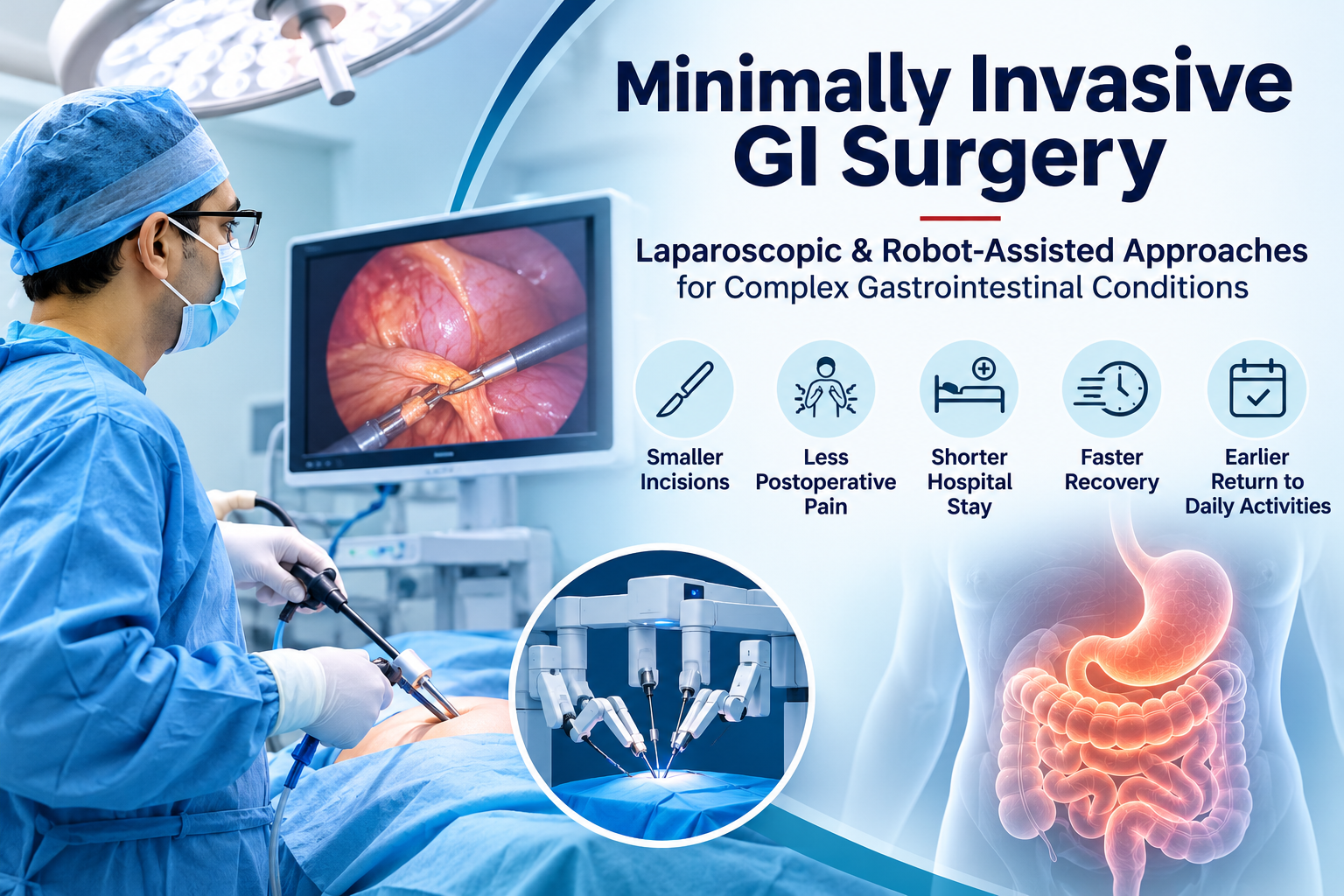
Advancements in gastrointestinal surgery have made it possible to treat several abdominal conditions through minimally invasive surgical techniques. Instead of making a large incision, these procedures use smaller cuts and specialised instruments to access and treat the affected area.
Laparoscopic surgery and robot-assisted surgery are two approaches included under minimally invasive surgery. They help surgeons perform selected gastrointestinal procedures while potentially reducing the physical stress associated with traditional open operations.
Understanding these techniques, their benefits and their limitations can help patients make informed decisions about surgical treatment.
What Is Minimally Invasive Gastrointestinal Surgery?
Minimally invasive gastrointestinal surgery refers to surgical procedures performed through smaller incisions compared with traditional open surgery.
It includes:
Laparoscopic Surgery: The surgeon uses a small camera and specialised instruments inserted through small incisions to perform the operation while viewing a monitor.
Robot-Assisted Surgery: The surgeon controls specialised robotic instruments to perform selected procedures. The system assists with surgical movements and visualisation, but the surgeon remains in control.
The choice of technique depends on the patient’s condition, the complexity of the procedure and the surgeon’s assessment.
How Is Laparoscopic Surgery Performed?
Laparoscopic surgery is also known as keyhole surgery.
During the procedure, the surgeon makes small incisions, generally around 5–15 mm, depending on the operation. Carbon dioxide gas is introduced into the abdomen to create space for the procedure.
A laparoscope, which is a thin instrument with a camera and light source, is inserted through one of the openings. The camera transmits images to a monitor, allowing the surgeon to perform the operation using specialised instruments.
Benefits of Minimally Invasive Gastrointestinal Surgery
For suitable patients, minimally invasive surgery may offer several advantages.
1. Smaller Surgical Incisions
Laparoscopic procedures use smaller cuts compared with traditional open abdominal surgery. This can reduce incision-related tissue trauma and improve cosmetic outcomes.
2. Reduced Postoperative Pain
Smaller incisions may reduce the overall physical stress associated with surgery and help decrease postoperative discomfort in suitable cases.
3. Shorter Hospital Stay
Patients undergoing selected laparoscopic procedures may require a shorter hospital stay compared with traditional open surgery.
4. Earlier Return to Diet
Minimally invasive surgery may allow earlier initiation of oral intake, depending on the procedure and the patient’s recovery.
5. Faster Overall Recovery
Reduced surgical stress, smaller incisions and earlier mobilisation may support recovery and help patients return to their normal activities sooner.
The actual benefits vary according to the operation, individual health and surgical findings.
Which Gastrointestinal Conditions Can Be Treated With Minimally Invasive Surgery?
According to the surgical services described on the Gastro Liver Care Pune website, laparoscopic techniques are used for several gastrointestinal conditions.
These include:
1. Gallbladder Stones: Laparoscopic cholecystectomy is performed to remove the gallbladder in patients with symptomatic gallstones.
2. Appendicitis: Laparoscopic appendicectomy is a minimally invasive approach to removing the appendix.
3. Hernia: Selected inguinal, incisional and umbilical hernias can be treated using laparoscopic repair.
4. Pancreatic Conditions: Advanced laparoscopic procedures may be used for selected pancreatic conditions, including pancreatic pseudocyst and pancreatic necrosis.
5. Intestinal Conditions: Laparoscopic small bowel and large bowel resection and anastomosis may be performed for selected conditions.
6. Colorectal Conditions: Selected conditions involving the colon and rectum, including colorectal cancers, may be treated using laparoscopic procedures.
7. Gastrointestinal Cancers: Minimally invasive techniques may be considered for selected cancers involving the oesophagus, stomach, gallbladder, liver, pancreas, colon and rectum.
The suitability of each procedure depends on the diagnosis, disease extent and the patient’s overall health.
What Is the Difference Between Laparoscopic and Robot-Assisted Surgery?
Both techniques fall under minimally invasive surgery, but they use different surgical instruments and technology.
| Feature | Laparoscopic Surgery | Robot-Assisted Surgery |
|---|---|---|
| Surgical access | Small incisions | Small incisions in suitable procedures |
| Instruments | Long, specialised instruments | Surgeon-controlled robotic instruments |
| Visualisation | Camera-based monitor view | Robotic camera system |
| Instrument movement | Conventional instrument movement | Flexible robotic instrument movement |
| Surgeon control | Direct control of instruments | Console-based control |
The most appropriate approach depends on the procedure and the surgeon’s experience. Robot-assisted surgery is not automatically better than conventional laparoscopy.
Is Minimally Invasive Surgery Suitable for Everyone?
No. Although minimally invasive surgery offers several benefits, it may not be appropriate for every patient.
According to the clinic’s laparoscopic surgery information, certain situations may make laparoscopic surgery unsuitable or increase the possibility of converting to open surgery.
These include:
Patients who are not suitable for general anaesthesia
Patients who are haemodynamically unstable
Patients with bleeding disorders
Patients with multiple previous open abdominal operations and significant adhesions
Patients with large tumours requiring complicated procedures
In some cases, the surgeon may need to convert a laparoscopic procedure into an open operation to ensure patient safety.
What Should Patients Know Before Surgery?
Before recommending an operation, the surgical team evaluates the patient’s medical condition and fitness for anaesthesia.
Preoperative assessment may include blood tests, chest X-ray and ECG, along with an anaesthesia consultation.
The surgeon should explain the proposed procedure, expected benefits, possible risks, recovery requirements and the possibility of conversion to open surgery where relevant.
Patients should discuss their medical history, previous surgeries and any existing health conditions during consultation.
Consult a Surgical Gastroenterologist in Pune
Choosing the appropriate surgical technique is an important part of gastrointestinal treatment. Laparoscopic and robot-assisted approaches may provide minimally invasive options for selected conditions.
Dr. Nikhil Jillawar is a Surgical Gastroenterologist in Pune with experience in gastrointestinal surgery, GI oncology and hepatobiliary surgery. His clinic provides surgical care for conditions involving the gallbladder, hernia, pancreas, intestines and other parts of the gastrointestinal tract.
Patients looking for a Laparoscopic Gastro Surgeon in Pune or Surgical Gastroenterologist in Pune can consult a specialist to understand their diagnosis and available surgical options.
Frequently Asked Questions
1. What is the main benefit of minimally invasive GI surgery?
Minimally invasive surgery uses smaller incisions and may reduce postoperative pain, shorten hospital stays and support earlier recovery in suitable patients.
2. Is laparoscopic surgery the same as robotic surgery?
No. Both are minimally invasive approaches, but laparoscopic surgery uses conventional instruments, while robot-assisted surgery uses specialised instruments controlled by the surgeon from a console.
3. Can all gastrointestinal conditions be treated laparoscopically?
No. Some conditions require open surgery, particularly when the disease is extensive or the procedure is highly complex.
4. Does minimally invasive surgery guarantee faster recovery?
No. Recovery depends on the type of operation, the patient’s overall health and any complications. Minimally invasive techniques may support quicker recovery in suitable cases.
5. What happens if laparoscopic surgery cannot be completed safely?
The surgeon may convert the procedure into open surgery if necessary. This possibility should be discussed before the operation.
Conclusion
Minimally invasive gastrointestinal surgery has expanded the treatment options available for several abdominal conditions. Laparoscopic and robot-assisted approaches offer different surgical technologies, with potential benefits such as smaller incisions, reduced postoperative discomfort and improved recovery in suitable patients.
However, not every condition is appropriate for minimally invasive treatment. An experienced surgical gastroenterologist can assess the patient’s condition and recommend the most suitable surgical approach.
Recent Posts
- Benefits of Minimally Invasive Gastrointestinal Surgery: Laparoscopic and Robot-Assisted Approaches
- Complex Hernia Repair: Treatment Options, Surgical Techniques and Recovery
- Achalasia Cardia: Symptoms, Causes and How Heller Myotomy Helps in Treatment
- Robotic vs Laparoscopic Surgery: Which Is Better for Gastrointestinal Conditions?
- Robotic Gastrointestinal Surgery: Advanced Technology Transforming GI Surgery